
In short: An investor pitch deck tells one story in about 12–15 slides. Open with what you do in one sentence, then problem, why now, solution and product, traction, market, competition, business model, go-to-market, team, financials and the ask. Every slide title should state its message, so the deck makes sense even when an investor only skims it.
Investors see many decks, and most of them follow the same order for a reason: it answers their questions in the sequence they ask them. Is this a real problem? Why now? Does it work? How big can it get? Can this team pull it off? The structure below follows that logic, one question per slide.
The storyline, slide by slide
1. The opener: what you do in one sentence
What is this company? One sentence that says what you do, for whom and why it matters, plus two or three numbers that prove it is real. If an investor stops reading after this slide, they should still be able to describe your company.
2. Problem
What is broken, and for whom? One clear problem, stated from the customer’s point of view, with its cost. Big type, one message: this slide sets up everything that follows.
3. Why now
Why hasn’t this been solved before, and why will it be now? Name the shifts that open the window: technology, regulation, behaviour or cost. This is where you show you understand the market, not just your product.
4. Solution
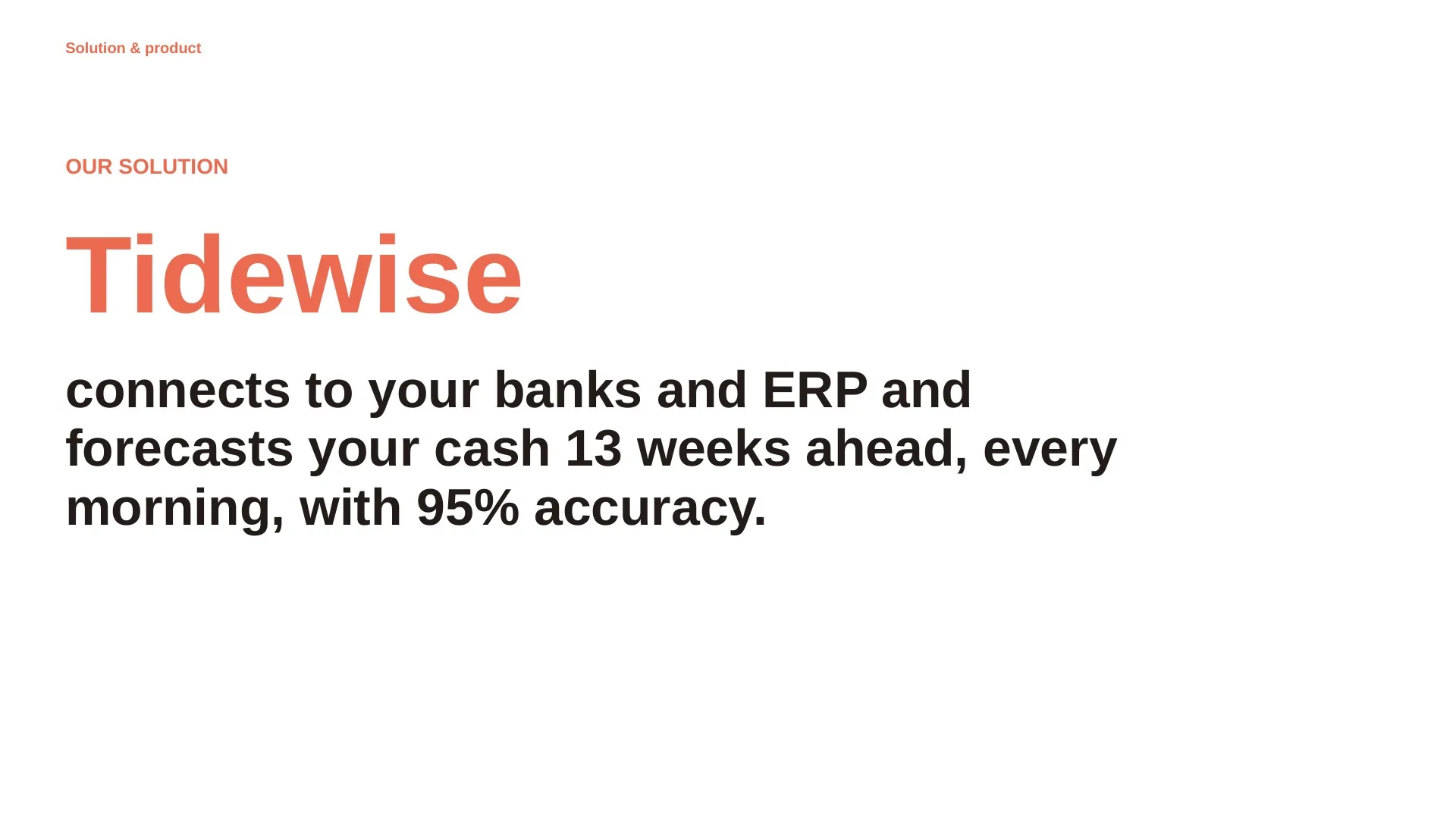
What do you do about it? Your solution in one sentence, directly answering the problem slide. Save the features for the product slide.
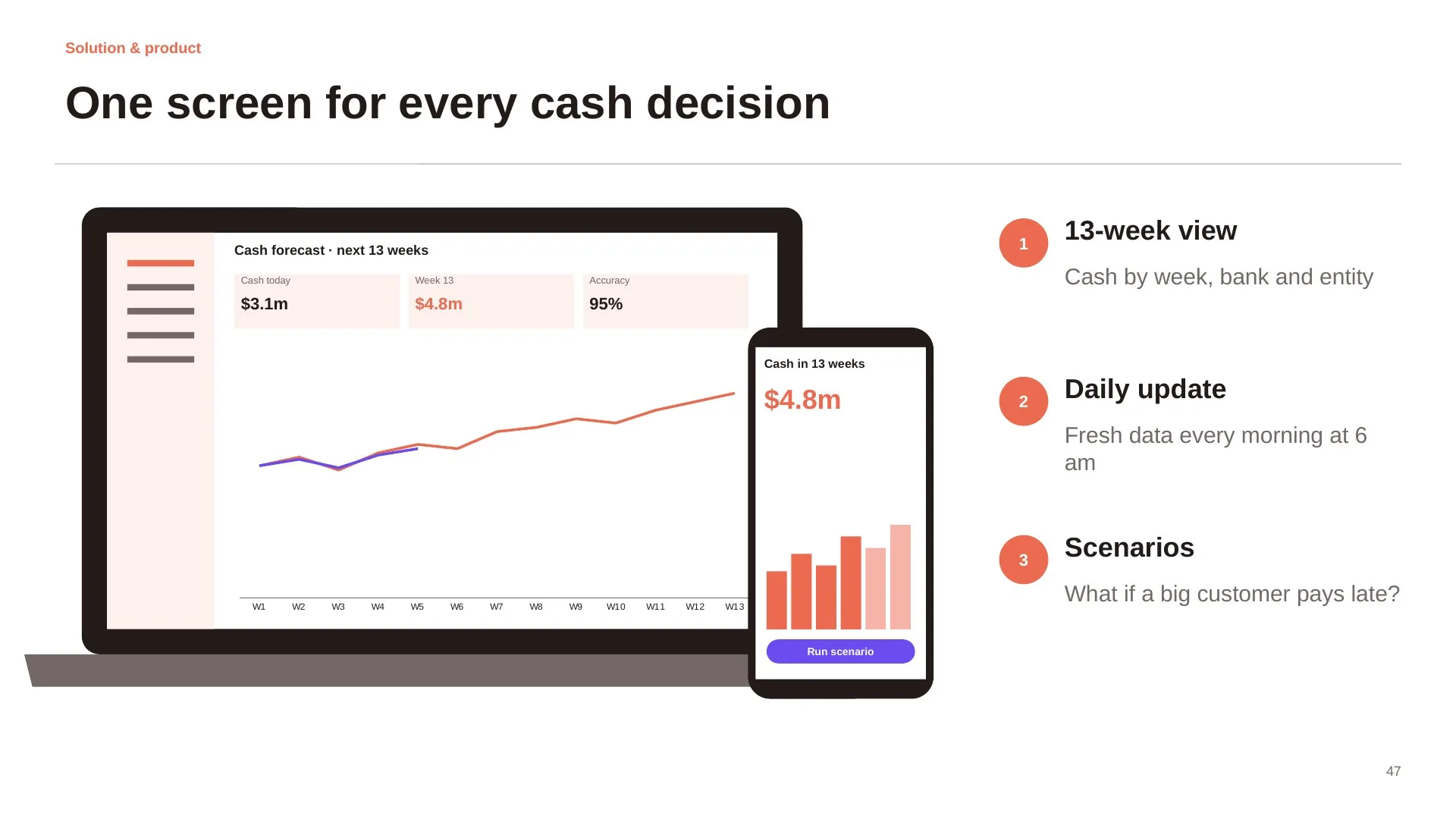
5. Product
What does it look like? Show the real product, in a screenshot or device mockup, with two or three callouts on what matters most. A picture of the product convinces more than a list of features.
6. Traction
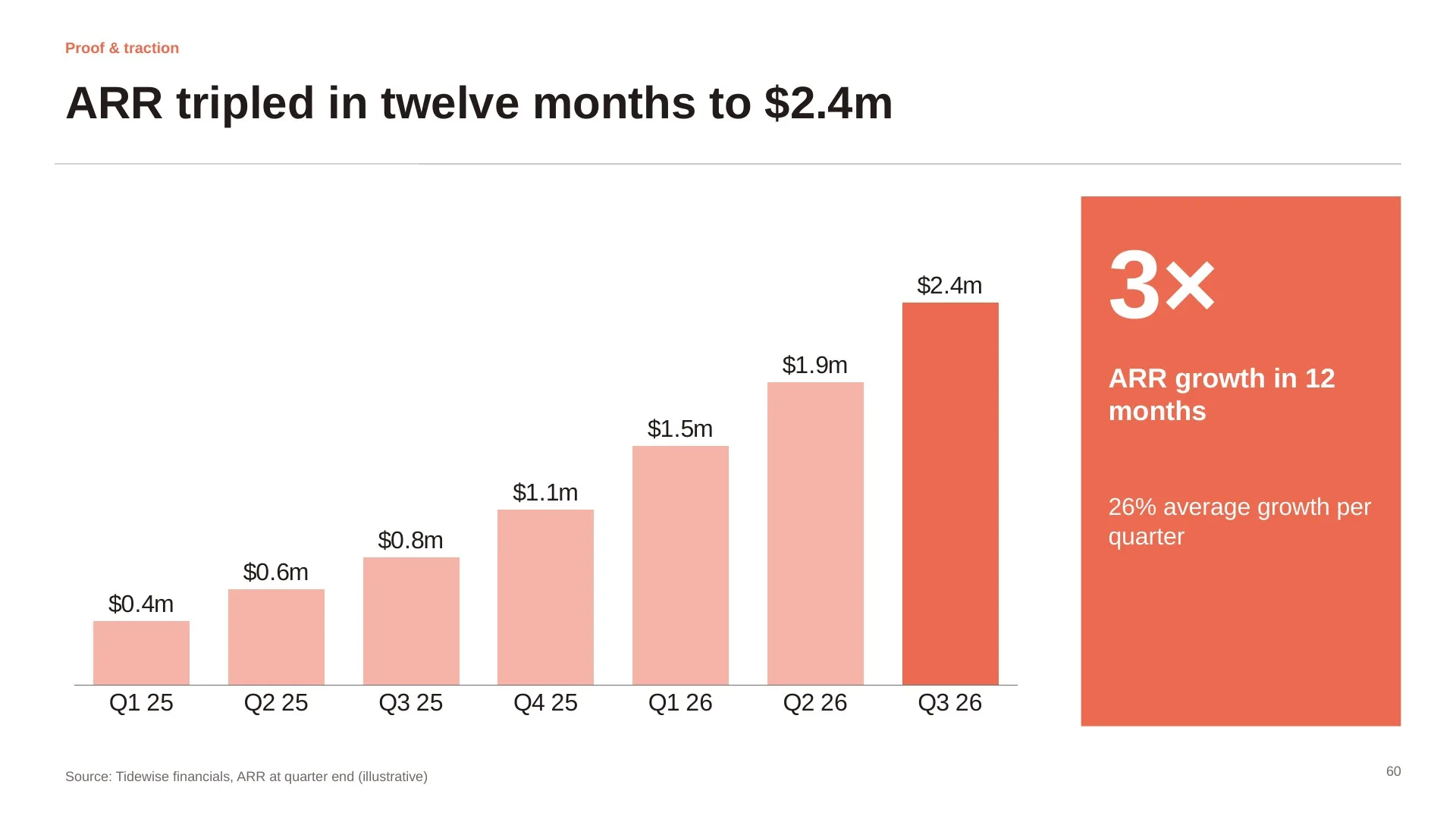
Does it work? Your strongest proof: revenue, growth, customers, retention or pilots. One chart, with the message in the title. If traction is your best argument, move this slide up.
7. Market size
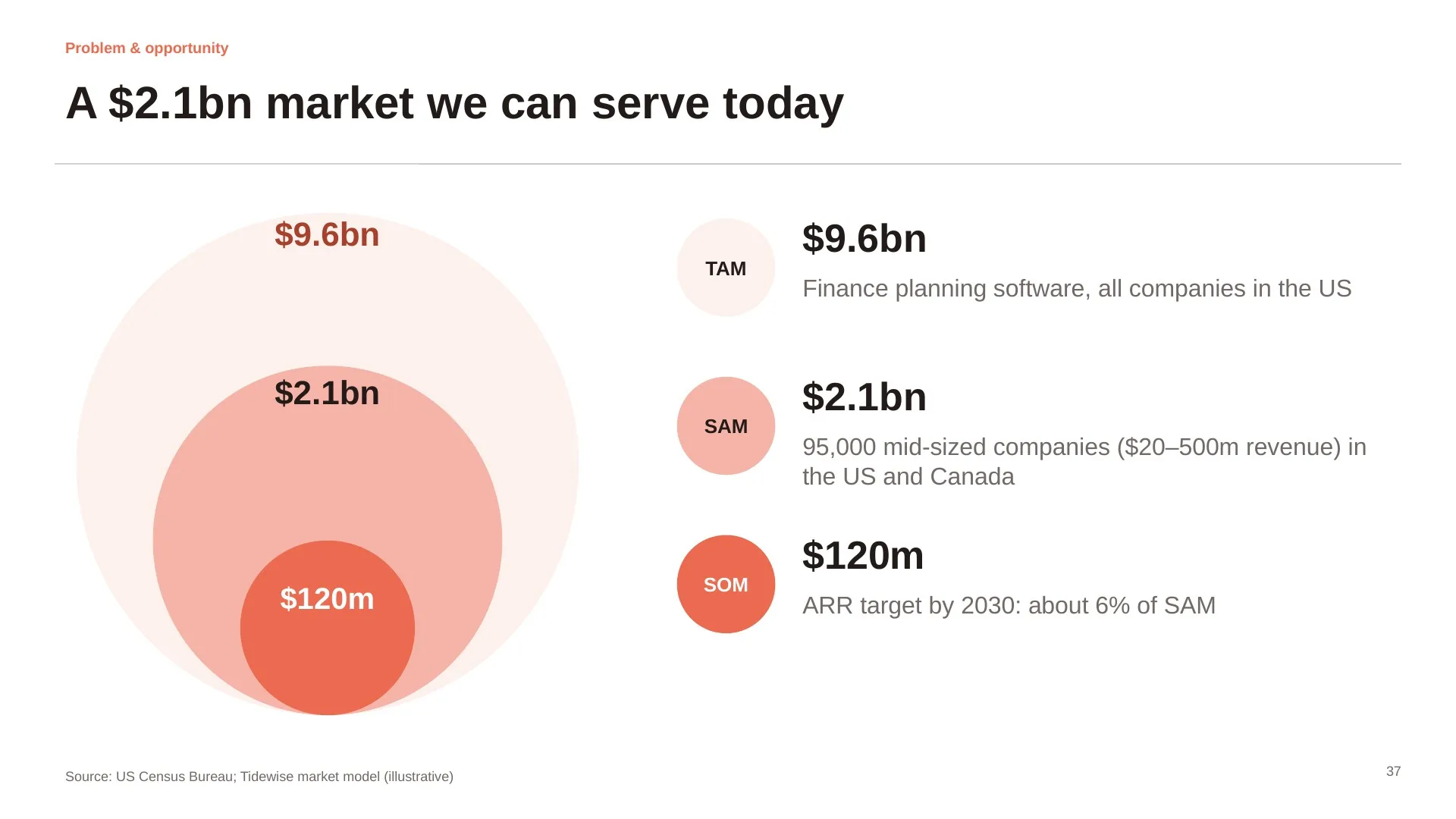
How big can this get? Total, serviceable and obtainable market, calculated from the bottom up where you can. A credible smaller number beats an inflated one.
8. Competition
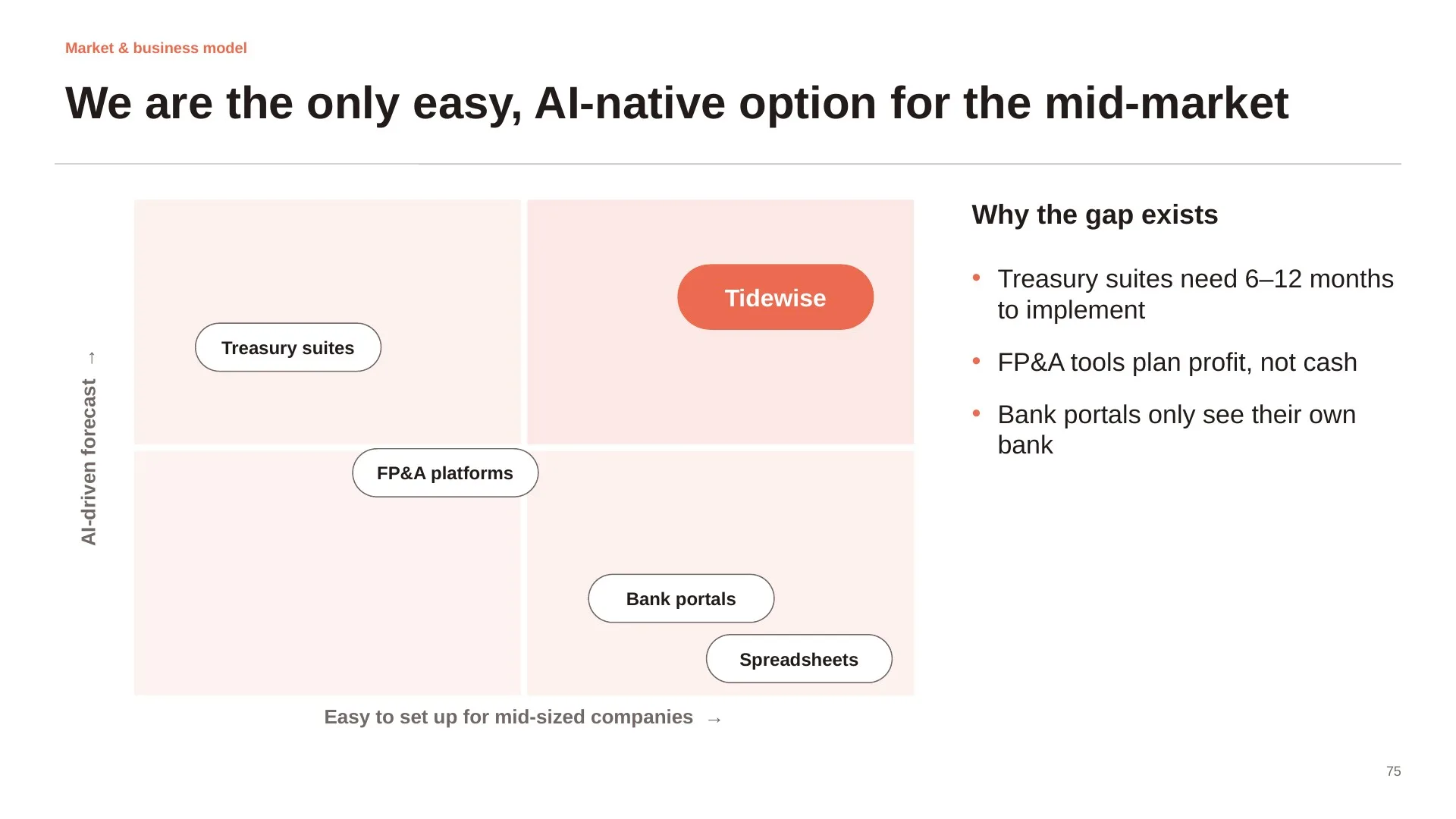
Who else does this, and why will you win? A two-by-two matrix on the two dimensions that matter most to customers, with you in the corner that wins. Name real competitors; “we have no competition” is a red flag.
9. Business model
How do you make money? Who pays, how much and how often, plus the one or two numbers that show it scales, such as contract value or upsell.
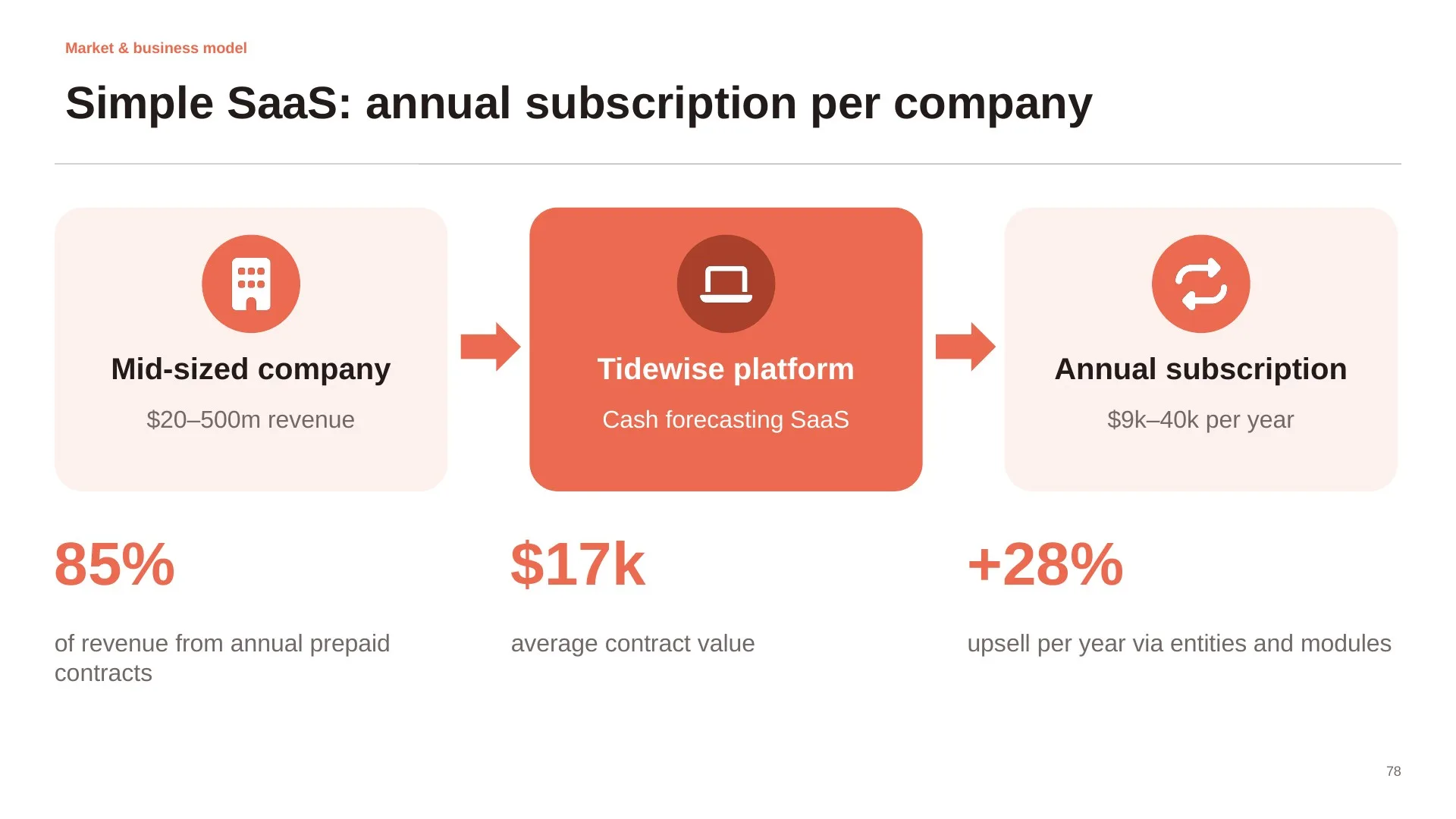
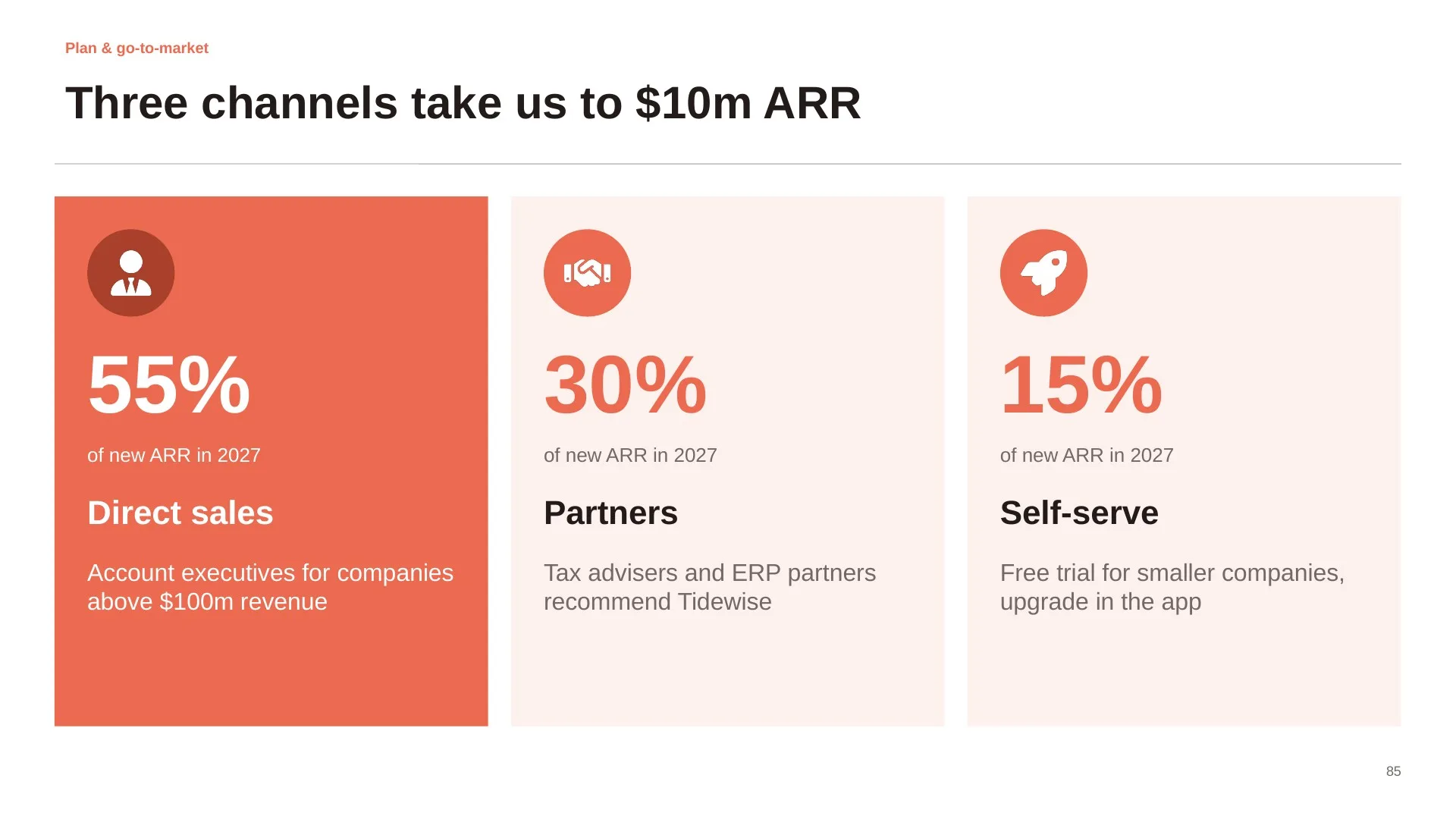
10. Go-to-market
How will you reach customers? Your channels and the order you will use them in, with what already works. Investors look for a repeatable way to grow, not a list of every possible channel.
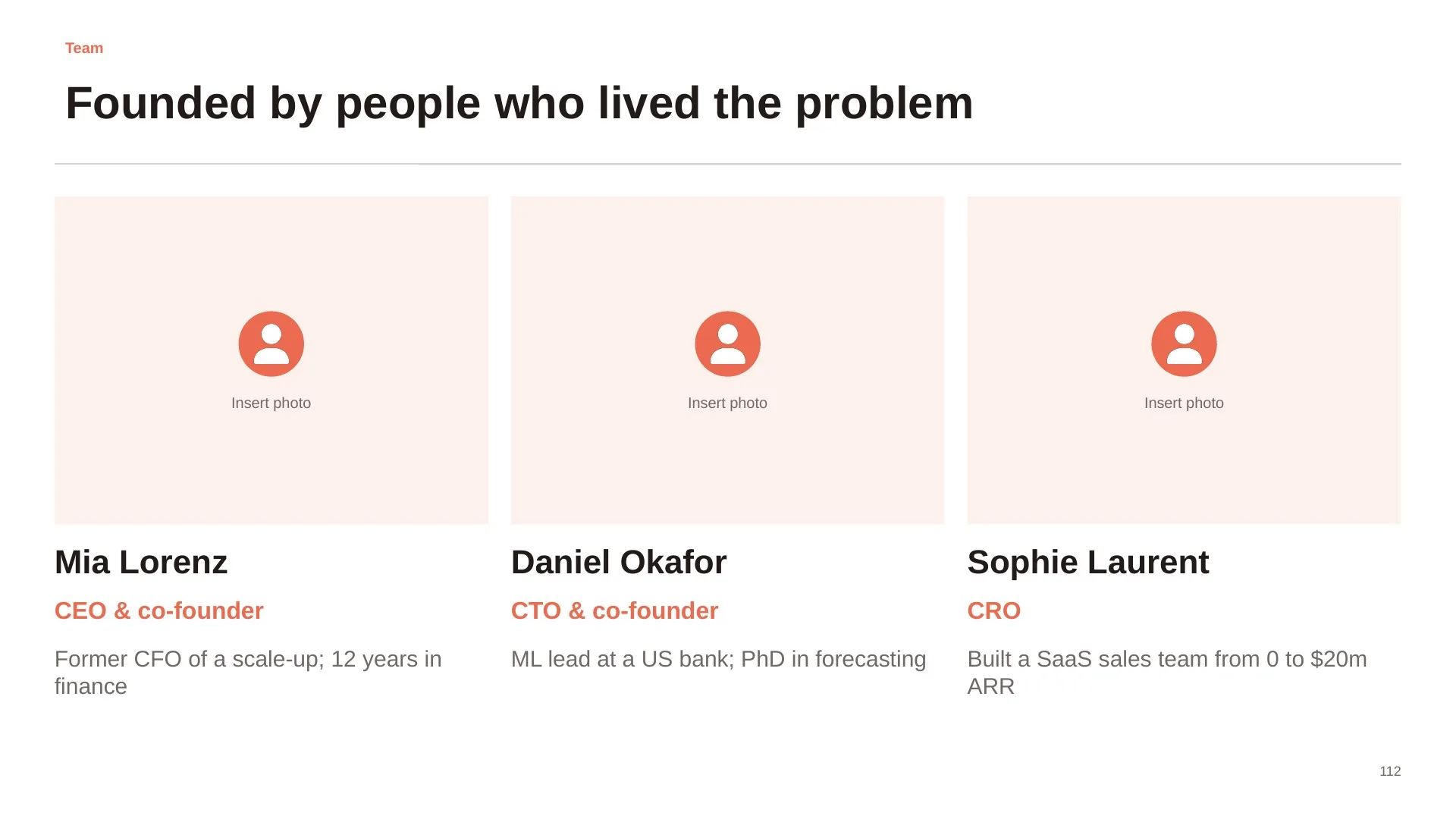
11. Team
Why are you the people to do this? The founders and key people, with the one fact about each that makes them right for this company. Skip long CVs.
12. Financials
Where is this going? Revenue and profitability for the next three to five years, with the key assumptions. Show the path to break-even or to the next milestone, not a hockey stick without explanation.

13. The ask
What do you need, and what does it buy? The amount, the type of round and the milestones it funds. Close with the next step you want.

The structure at a glance
| # | Slide | Question it answers |
|---|---|---|
| 1 | Opener | What is this company? |
| 2 | Problem | What is broken, and for whom? |
| 3 | Why now | Why will this be solved now? |
| 4 | Solution | What do you do about it? |
| 5 | Product | What does it look like? |
| 6 | Traction | Does it work? |
| 7 | Market size | How big can this get? |
| 8 | Competition | Why will you win? |
| 9 | Business model | How do you make money? |
| 10 | Go-to-market | How will you reach customers? |
| 11 | Team | Why are you the people to do this? |
| 12 | Financials | Where is this going? |
| 13 | The ask | What do you need, and what does it buy? |
A worked example
The slides above come from Tidewise, the worked example in the Demo edition of the Pitch Slide Toolkit: a SaaS start-up that forecasts cash for mid-sized companies. Here is how the storyline builds the case.
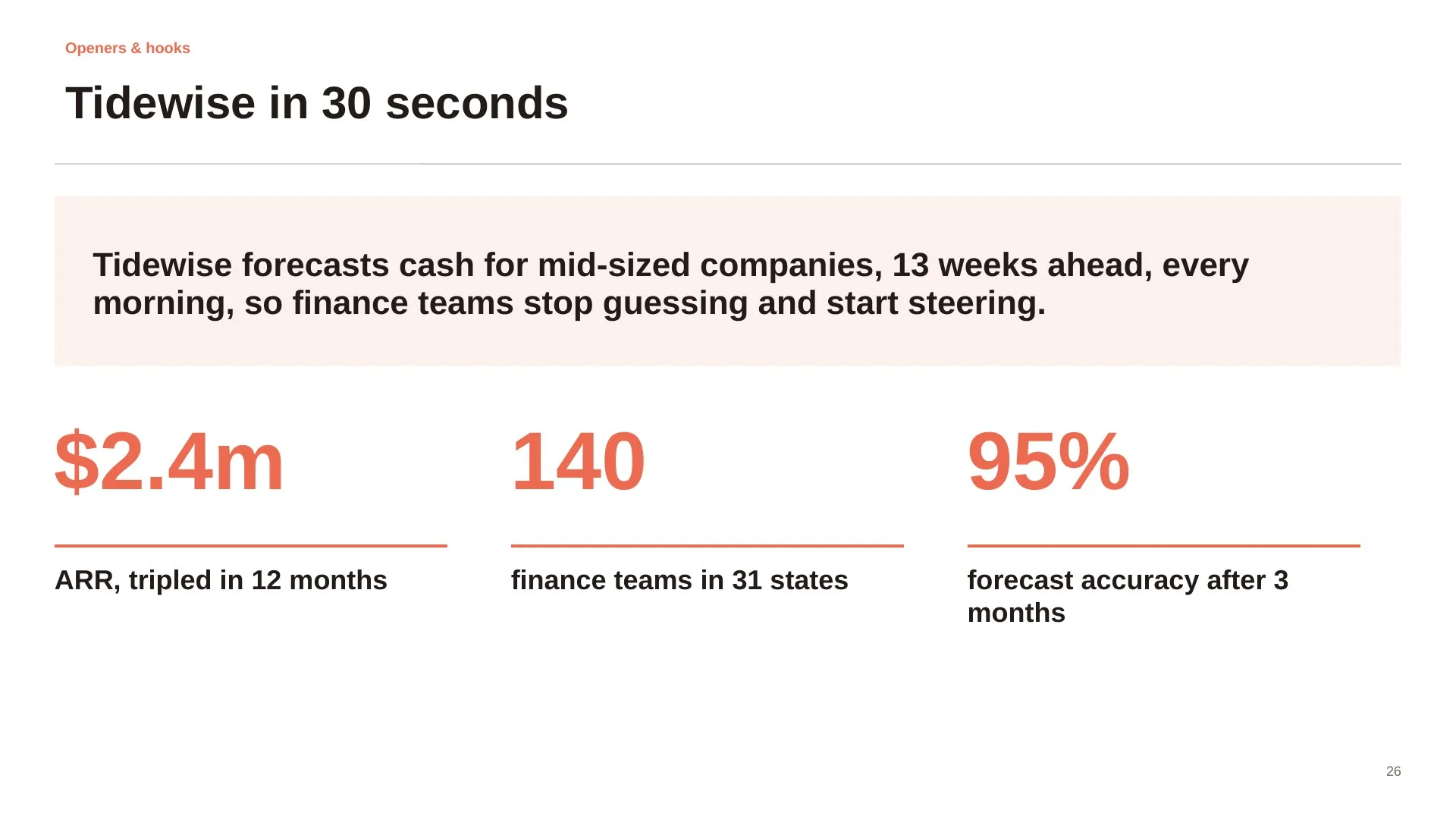
- The opener says it in one sentence: Tidewise forecasts cash for mid-sized companies, 13 weeks ahead, every morning. Three numbers make it real: $2.4m annual recurring revenue, 140 finance teams and 95% forecast accuracy after three months.
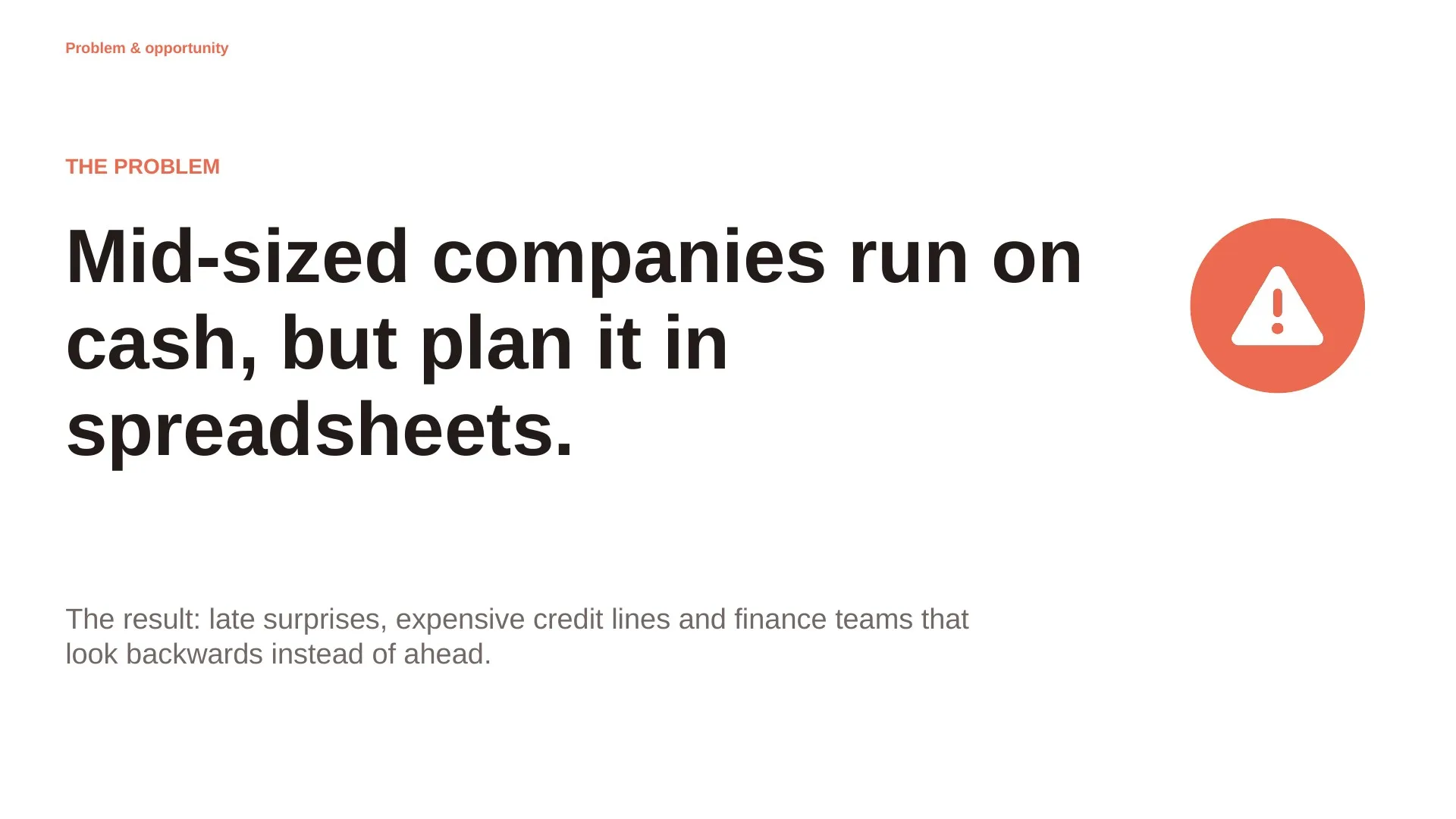
- The problem slide has one big statement: mid-sized companies run on cash, but plan it in spreadsheets. The line below names the cost: late surprises, expensive credit lines and finance teams that look backwards.
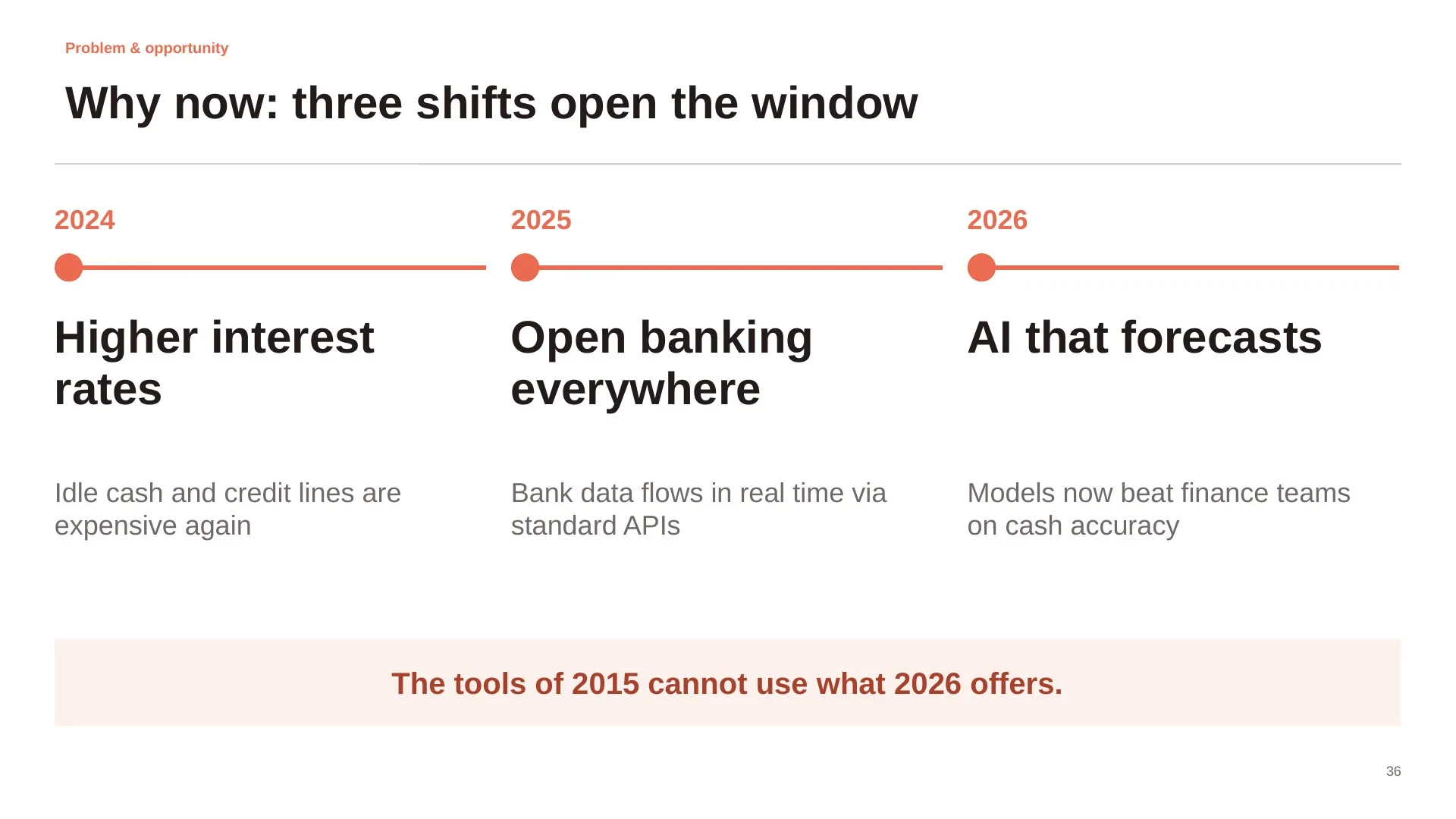
- Why now names three shifts, each on a timeline: higher interest rates, open banking and AI that forecasts. Together they explain why this is the right moment.
- The traction slide puts the message in the title, “ARR tripled in twelve months to $2.4m”, and the chart shows each quarter.
- The ask is specific: $8m Series A to reach $10m ARR, with 30 months of runway and the milestones the money buys.
Notice that every title is a full sentence with a number in it. An investor who reads only the titles still gets the pitch.
Common mistakes
- Starting with the team or the company history. Investors want to know what you do first.
- Topic titles like “Market” or “Traction”. Write the message instead: “A $2.1bn market we can serve today”.
- Too much text on a slide you present. If people are reading, they are not listening.
- Inflated market sizes. A top-down number from a research report convinces nobody; a bottom-up one does.
- A vague ask. “Raising a seed round” is not an ask. Name the amount, what it buys and how long it lasts.
Adapting the structure
For a deck you send before a meeting, keep the same order but make each title a complete sentence and add a short line of explanation. The deck has to work without you.
For an early-stage company without revenue, replace traction with the strongest signals you have: pilots, letters of intent, a waiting list or test results. Move it after the market slide.
For a pitch inside a company, the same logic works for an idea or a project approval: problem, why now, solution, proof, cost and the ask. Swap the market and competition slides for the impact on the business.
Get the storyline ready-made
The Pitch Slide Toolkit includes the investor pitch as a ready-made storyline, with Tidewise as a fully worked example, plus storylines for an idea pitch, a project approval and a keynote.
Questions
How many slides should a pitch deck have?
Around 12 to 15 for the main story. Put detail such as cohort data, unit economics and product deep dives in an appendix you can open when investors ask.
Should the traction slide come before the market slide?
If you have strong traction, yes. Proof is your best argument, so show it early. Without traction yet, lead with the problem and the market, and show early signals such as pilots or a waiting list instead.
Do I need a different deck for sending and for presenting?
Ideally, yes. A deck you send must work without you, so it needs fuller slide titles and a little more text. A deck you present can be sparser, because you do the talking.
What should the ask slide include?
The amount, the type of round, what the money buys in milestones, and how long it lasts. Close with what you want next, for example a lead investor or a follow-up meeting.
About slidefind: PowerPoint toolkits created and hand-picked by experts. Developed with professionals from consulting, finance, start-ups and academia.